Knowing what you want to eat is not always the same as having a recipe you can follow.
A meal idea might begin as something simple such as a chicken bowl, vegetable pasta, beef stir-fry, soup, salad, or a meal selected from a weekly meal plan. Turning that idea into a practical recipe means deciding what ingredients you actually intend to use, how many people you are preparing food for, how much time you have, and how the preparation should be organized.
The goal is not to make every recipe complicated. It is to create enough structure that the ingredients and preparation steps are clear, realistic, and easy to review before you start cooking.
Start With the Meal Idea
Begin by describing what you actually want to prepare. The meal idea gives the recipe direction before you start choosing quantities or cooking steps.
A useful meal idea can be broad or specific. What matters is that it gives you enough context to decide which ingredients and preparation method make sense.
- A grilled chicken and vegetable bowl
- A beef and tomato dinner
- A vegetable pasta
- A soup using ingredients already available
- A particular meal selected from a weekly meal plan
Identify the Ingredients You Actually Want to Use
Once the meal idea is clear, identify the ingredients you already have or specifically want included.
Starting with real ingredients can make recipe planning more practical because the recipe is built around food that is available to you rather than an idealized ingredient list that requires unnecessary substitutions or extra shopping.
If only a small number of ingredients are available, a simpler recipe may be more useful than adding many unrelated ingredients just to make the dish appear more elaborate.
Separate Core Ingredients From Simple Supporting Ingredients
It can help to distinguish the ingredients that define the meal from small supporting ingredients used for preparation or seasoning.
For example, the core ingredients might include beef, tomato, onion, and garlic, while simple supporting ingredients could include olive oil, pepper, dried herbs, water, lemon, lime, or vinegar where appropriate.
Keeping that distinction clear reduces the chance of turning a simple meal idea into a recipe that requires many ingredients you never intended to use.
Record Dietary Information and Foods to Avoid
Dietary information should be considered before the recipe is created rather than checked only after the ingredients have been selected.
If you follow a particular eating pattern or need certain foods excluded, include that information as part of the recipe-planning context.
- Dietary preference or eating pattern
- Ingredients you want excluded
- Known allergens
- Foods you prefer not to use
- Other relevant food preferences
Treat Food Allergies and Medical Nutrition Needs Carefully
Recipe planning tools do not independently verify food safety for you
If you have a food allergy, medically required diet, diagnosed nutrition-related condition, medication interaction, pregnancy-related nutrition requirement, or another significant health concern, follow guidance from an appropriately qualified healthcare professional. Independently check ingredients, labels, allergen information, preparation methods, and cross-contact risks that apply to you.
Decide How Many Servings You Need
Serving count affects ingredient quantities, so decide how many people or portions the recipe needs to provide before settling on measurements.
A recipe for one serving should not simply use the same ingredient quantities as a recipe intended for four people. Quantities should be scaled to the number of servings you actually plan to prepare.
Plan Around the Time You Actually Have
Available cooking time affects which preparation methods are realistic.
A recipe intended for a busy weekday evening may need a different structure from one prepared when you have considerably more time.
If you only have a short preparation window, choose cooking methods and ingredient preparation that can realistically fit inside it rather than creating a recipe that looks appealing but cannot be completed on time.
Keep the Preparation Appropriate to Your Cooking Experience
Recipe complexity should also reflect how comfortable you are in the kitchen.
A beginner-friendly recipe usually benefits from shorter steps, common cooking techniques, clear temperatures or timings where relevant, and fewer tasks that need to happen simultaneously.
A practical recipe does not need advanced techniques to be useful.
Use Cuisine as Context, Not as a Reason to Add Unnecessary Ingredients
Cuisine preference can help guide seasoning, preparation style, and the overall character of a recipe.
However, cuisine should not automatically require additional foods that are not available or wanted. It is often more practical to use the ingredients you already intend to cook and apply an appropriate preparation style around them.
Treat Calorie Targets as Planning Context Rather Than an Excuse to Invent Ingredients
If you use a calorie target as part of general meal planning, it can provide another piece of recipe context.
The recipe should still remain realistic for the ingredients and quantities being used. Adding unrelated foods solely to force a recipe toward a particular number can make the result less useful.
Calorie and nutrition estimates in general recipe-planning tools should not be treated as individualized clinical nutrition prescriptions.
Write the Ingredient List Clearly
A useful ingredient list should tell you what is needed and approximately how much is required before cooking begins.
Use specific ingredient names rather than vague categories. For example, “200 g broccoli” is clearer than “vegetables,” and “250 g beef rump steak” is clearer than “protein.”
- Name each main ingredient clearly
- Include practical quantities
- Use consistent measurement units
- Add preparation notes where useful, such as diced, sliced, or crushed
- Avoid listing ingredients that never appear in the preparation steps
Turn the Ingredients Into a Logical Sequence of Steps
Once the ingredients are clear, organize the cooking process into the order in which tasks should happen.
Each step should describe a useful action rather than combining too many unrelated tasks into one long instruction.
For beginner-friendly recipes, shorter imperative steps can make the process easier to follow while cooking.
Review the Recipe Before You Start Cooking
Whether you write a recipe yourself or use a digital recipe-planning tool, review the complete result before relying on it.
- Are all listed ingredients available to you?
- Does the recipe accidentally contain anything you intended to avoid?
- Have you checked allergens and ingredient labels where relevant?
- Do the quantities appear sensible for the number of servings?
- Can the recipe realistically be completed in the available time?
- Are the preparation steps clear enough to follow?
- Are cooking temperatures and food-safety instructions appropriate where relevant?
Move From a Meal Plan to an Individual Recipe
Meal planning and recipe planning solve different parts of the same everyday food-planning process.
A weekly meal plan helps organize what you may eat across several days. When you want more detail for one meal, recipe planning can turn that meal idea into ingredients and preparation steps.
This makes it possible to plan the week first and then add recipe detail only where it is useful.
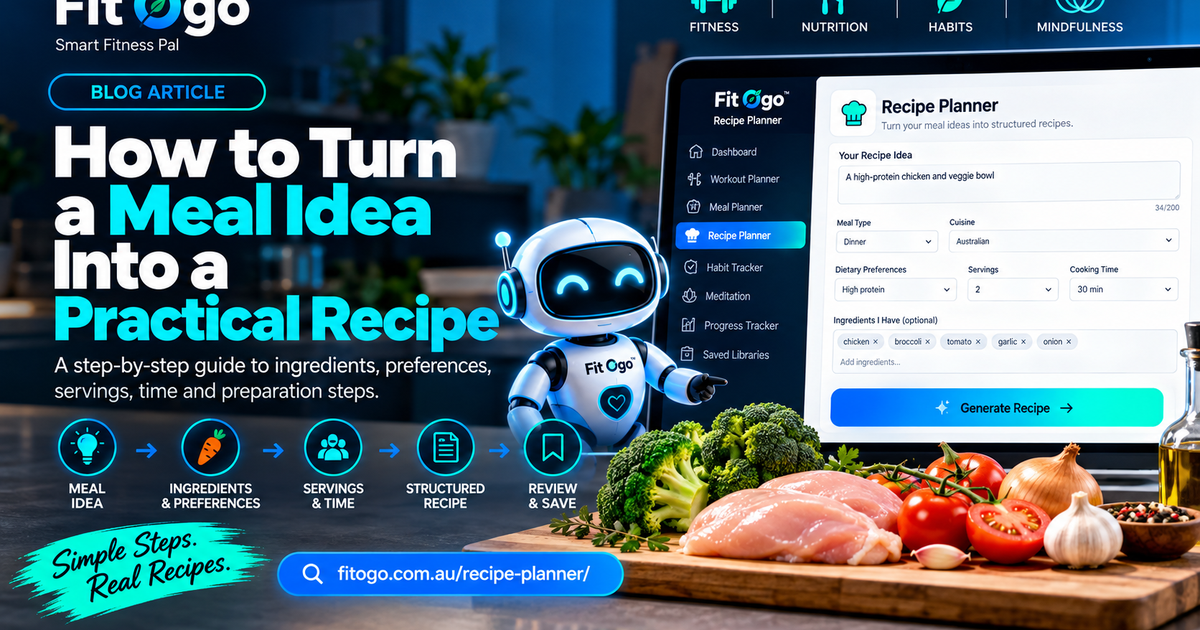
Using the Fit Ogo™ Recipe Planner
Fit Ogo™ provides a structured Recipe Planner workflow for bringing supported recipe information together in one place.
You can provide supported information such as meal context, ingredients, preferences, dietary information, servings, available time, and other recipe details requested by the Recipe Generator.
Fit Ogo™ can then organize that information into a structured recipe for you to review, including an ingredient list and preparation steps.
The aim is to make recipe planning clearer. Generated recipes should still be reviewed before you prepare or rely on them.
Build a Recipe-Planning Process You Can Repeat
A useful recipe-planning process does not need to begin from zero every time.
Over time, you can develop a simple sequence: identify the meal, list the ingredients you intend to use, record any important exclusions or preferences, choose the serving count and available cooking time, then organize the preparation steps.
That repeatable structure can make it easier to move from a meal idea to something you can actually prepare.
Fit Ogo™ Recipe Planner
Turn Your Meal Idea Into a Structured Recipe
Bring supported recipe information such as meal context, ingredients, preferences, dietary information, servings, and available time into one structured workflow, then review the generated recipe.
Explore the Fit Ogo™ Recipe PlannerExplore Related Fit Ogo™ Guides & Tools
How to Build a 7-Day Meal Plan Around Your Routine
Learn how to organize a practical week of meals before moving into individual recipe detail.
Explore the Fit Ogo™ Meal Planner
Organize supported meal-planning information into a structured 7-day meal plan for review.
Read the Fit Ogo™ Health Disclaimer
Review the nutrition and wellness-education boundary that applies across Fit Ogo™.
Fitness & wellness education only. Fit Ogo™ provides general fitness, nutrition, habit, meditation, and wellness education and planning support only. It does not provide medical advice, diagnosis, treatment, or individualized clinical nutrition care. Review generated recipes against your own dietary needs, allergies, ingredients, labels, preparation instructions, food-safety requirements, health circumstances, and relevant professional guidance.